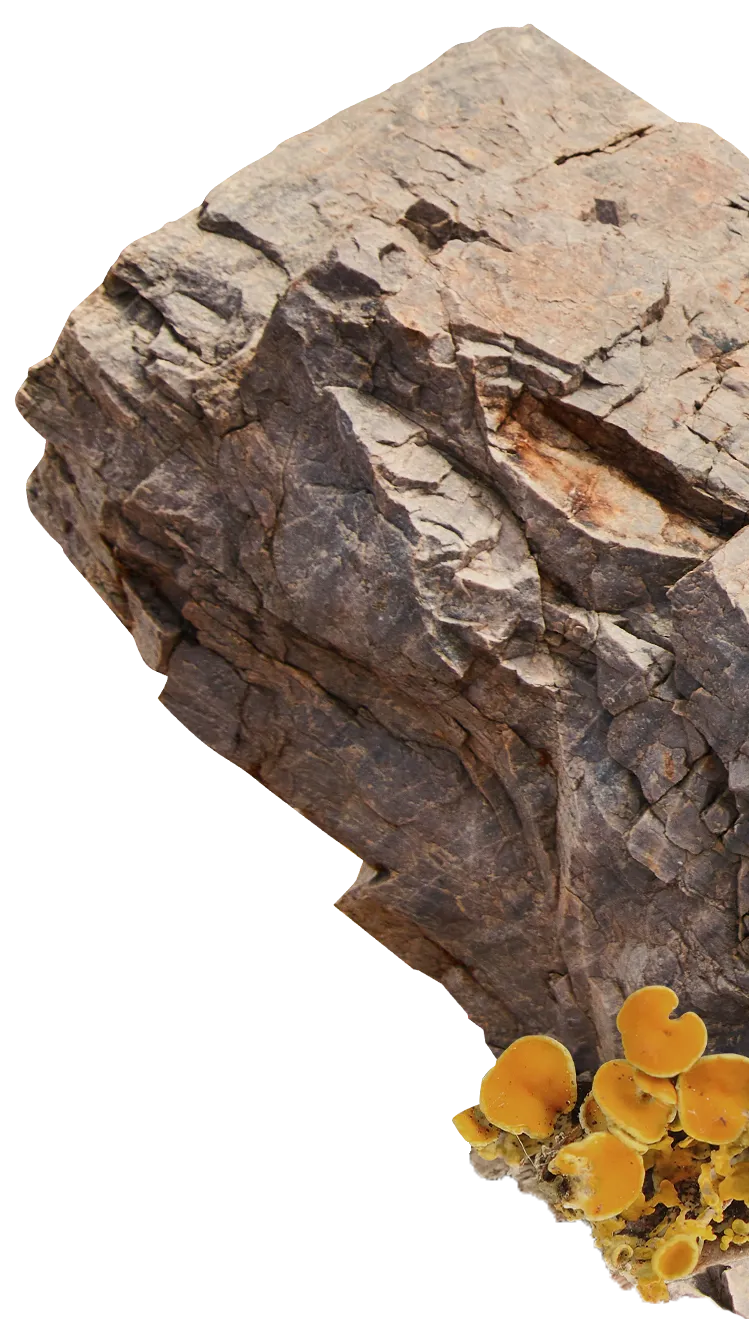
These sculptural bronze sinks derive inspiration from Japanese ceramic tea vessels and fractured stone formations, reflecting the aesthetic philosophy ofwabi-sabi
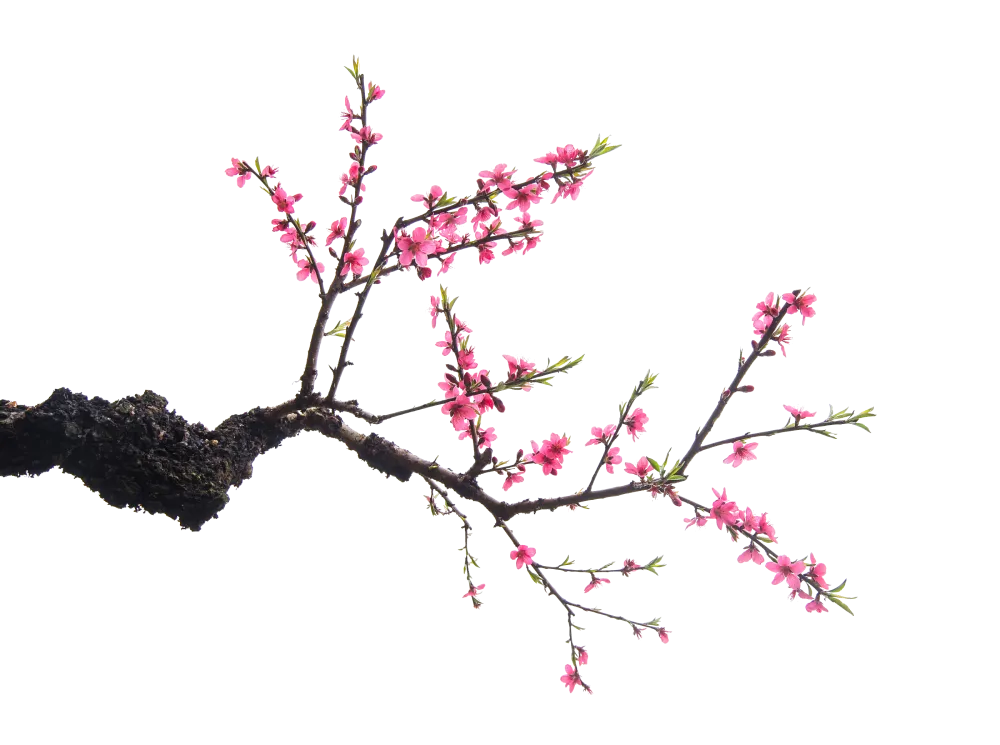
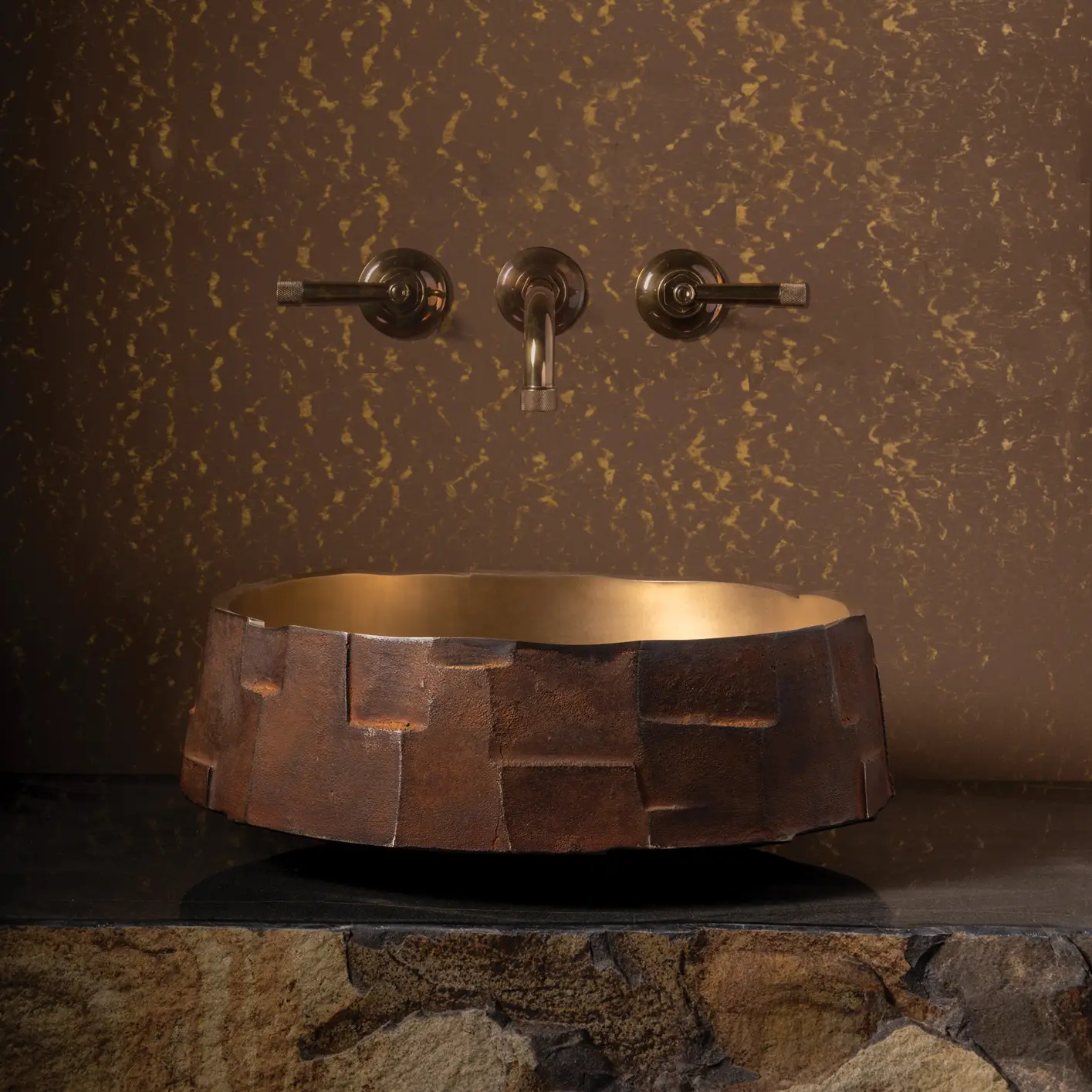
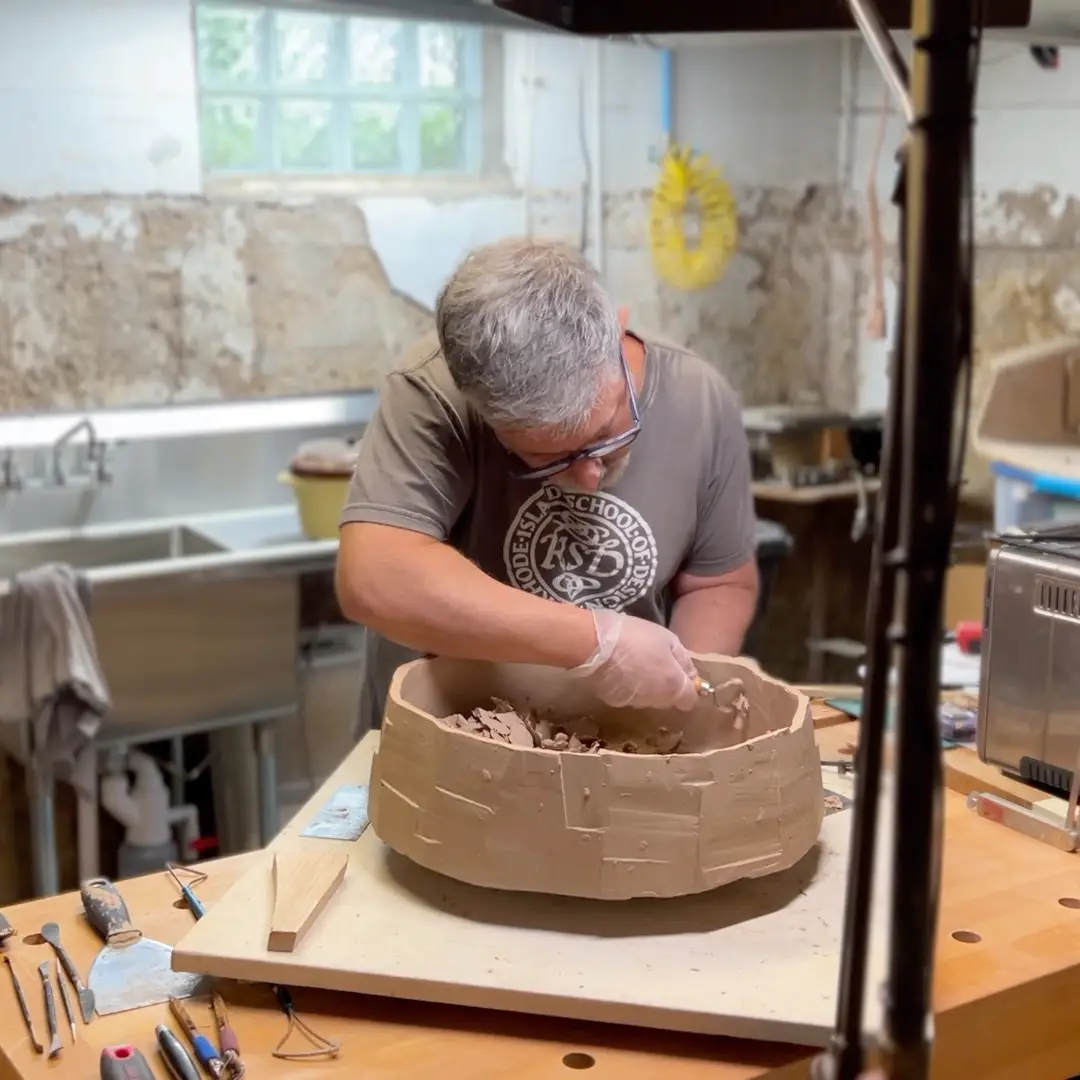
The design was inspired by fractured stone formations and, more directly, by Japanese ceramic tea vessels created with the kurinuk, method, a loose, spontaneous subtractive method of creating work by hand where material is carved away and the form is hollowed. The irregular, imperfect forms and surfaces, as well as variations within the patina, align with the Japanese aesthetic philosophy of wabi-sabi, which embraces that which is naturally imperfect, irregular, weathered, and unadorned. In ceramics, this method of working stands incontrast to other hand-making methods such as wheel throwing, slab building, or coil building. The work shows the marks of the maker, and those marks have intrinsic value, Producing the sinks using traditional sand-casting adds another layer of variability,
While initial sketches and a control drawing were used to explore the overall form and communicate the intention, it was not possible or desirable to create an accurate drawing or CAD model that could be used to produce the piece because the final form could only be achieved through spontaneous direct sculpting. Since the original inspiration comes from ceramics and since clay is commonly used to create sculptures that are intended to be cast in bronze, Babick chose to sculpt the piece in clay. Clay is also the only material that allows for the specific types of imperfections and irregularities found on ceramic Japanese vessel. Other traditional and industrial sculpture materials, like wax or modeling foam, simply don’t respond to quick, spontaneous sculpting the same way clay responds.
There are two significant differences between kurinuki ceramic vessels and a piece intended to be produced by sand casting bronze. The first is that one-off ceramic vessels don’t need to account for draft, so they can take on any form. For the sink, every tiny surface had to have enough of a draft angle that the production pattern could be pulled out of the casting sand without disturbing it. This sets up the contradiction of maintaining loose, spontaneous sculpting while carefully controlling the angle Of every surface. Second, clay is inexpensive compared to bronze, so ceramic artists don’t need to be so concerned with how much material is used in each piece. For the bronze sink; however, the thickness of the walls had to be minimized to keep the amount of bronze reasonable and affordable.
2024 Product Innovation Award from Architectural Products Magazine
2025 Residential Excellence in Design Award from Luxe Magazine