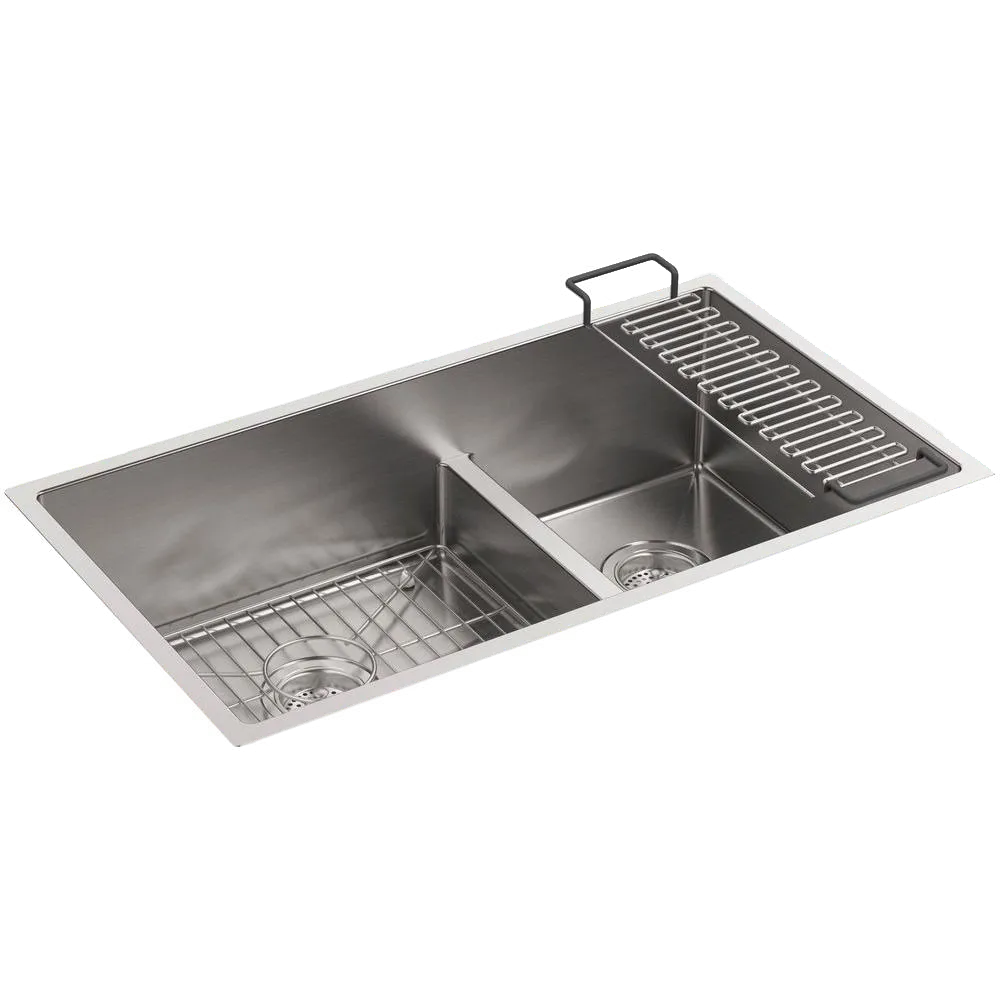
Casting iron in sand molds is an ancient technique, yet despite centuries of process and material innovation it remains very much an art.
This specialized manufacturing, when applied to price-sensitive channels, facilitates success in the mass-market cast iron sink category but also dramatically constrains product innovation and design. ‘New’ products often provide incremental differences but lack meaningful, consumer-relevant differentiation. Innovation has to come from somewhere other than subtle changes in form. Studio Babick had two revelations. First, ⅔ of existing homes and 100% of new homes have dishwashers; therefore, sinks become the territory for large items. People rarely fill both basins of a two-basin sink to hand wash dishes anymore. Second, washing baking sheets or large pots and pans with handles in a traditional two-basin sink is problematic because the height of the divider between the basins prevents large items from fitting within the confines of the sink. Water goes everywhere.
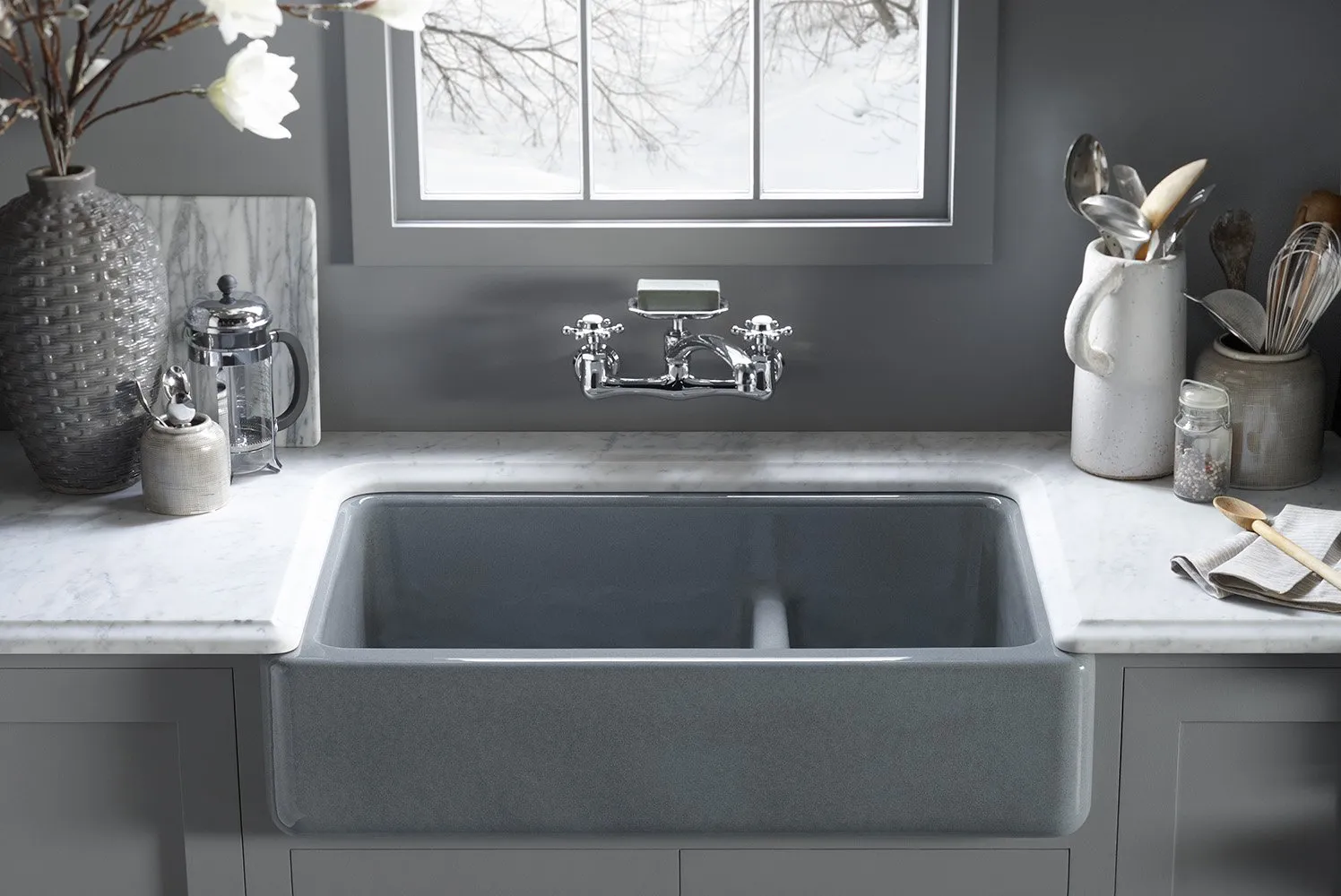
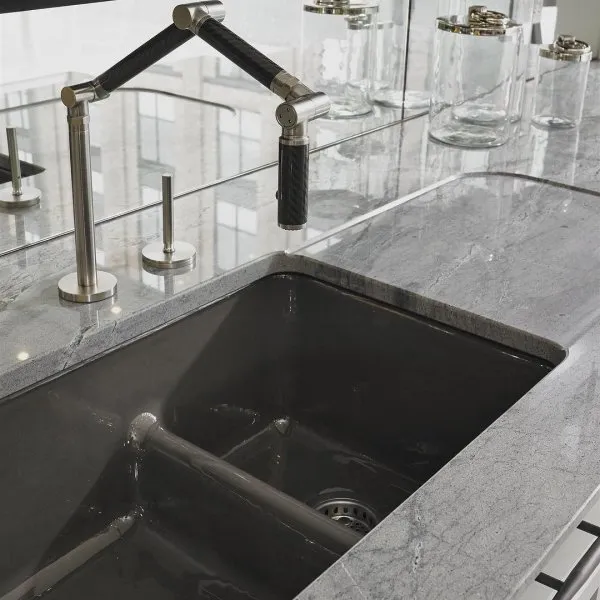
Our solution, lowering the height of the divider between the basins allows large items to be washed easily while retaining the modern functionality of having two basins. But it did more than that. During the cooling process, the hot iron castings can warp. The high divider of a traditional two basin sink creates a hinge around which the cooling metal tends to warp easily, resulting in a high scrap rate. Lowering that hinge prevented the sinks from warping as easily, thus reducing the scrap rate, which keeps costs down.
What started as a highly constrained project ended up as a benchmark of innovation for Kohler and brought them a U.S. Utility Patent.
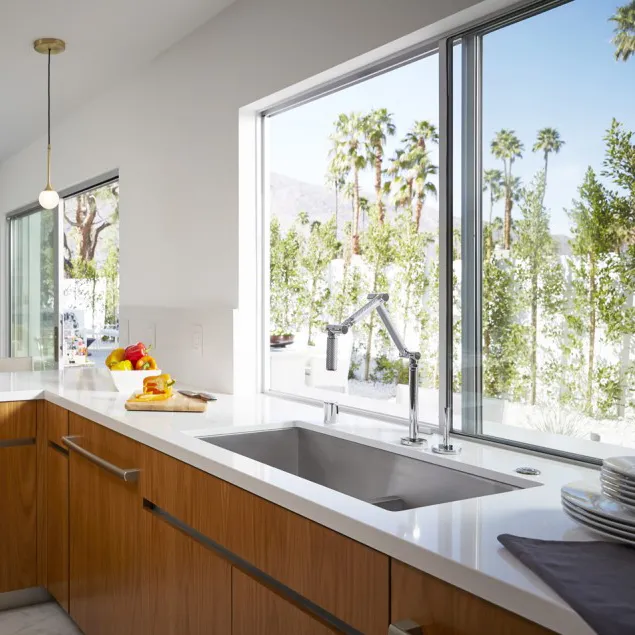
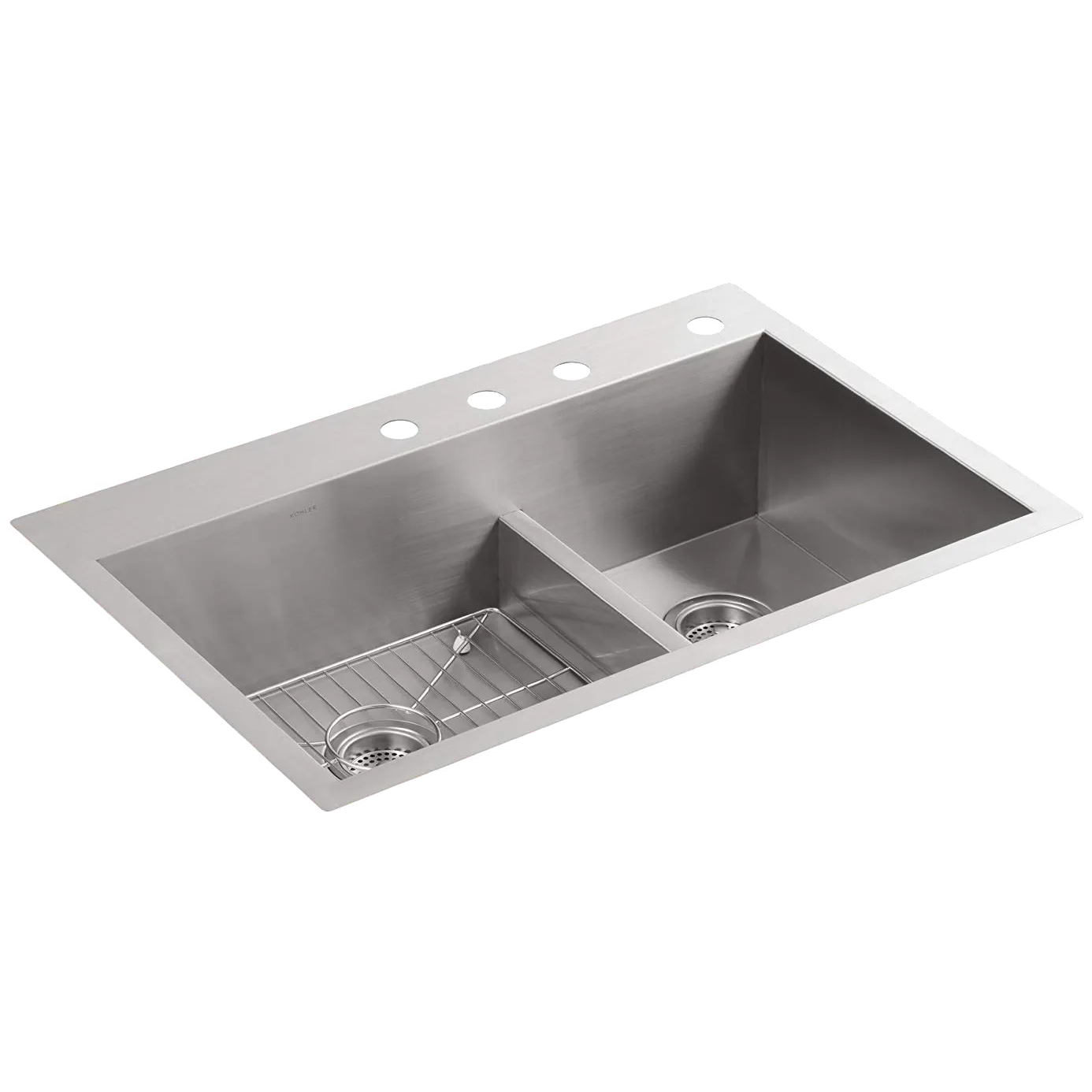
The concept proved extremely popular, and has been integrated into multiple Kohler sink lines at different price points.